


Intent
At Enderby Road Infant and Nursery School, we strive to support all our all our pupils to become fluent readers.
Our aims are for pupils to:
- Build on their growing knowledge of the alphabetic code, mastering phonics to read fluently and with confidence as they move through school.
- Be equipped to tackle any unfamiliar words as they read.
- Read confidently for meaning and regularly enjoy reading for pleasure.
- See themselves as readers for both pleasure and purpose.
- Be taught fidelity to the Little Wandle Letters and Sounds Revised programme
Implementation
- We start teaching phonics in Nursery using the Little Wandle foundations for phonics programme.
- We teach a synthetic phonics programme following the Little Wandle Letters and sounds Revised Programme through Reception and Year 1.
- Our Year 2 children continue their journey to become confident fluent readers by following the Little Wandle Fluency programme.
- We model the application of the alphabetic code through phonics in shared reading and writing, both inside and outside of the phonics lesson and across the curriculum.
- Oracy and language development form part of our school core drivers, these support our strong focus on the development of speaking and listening skills as we believe these skills form the foundation for children’s success in all subjects.
Foundations for phonics in Nursery
We ensure our children have a strong start to early reading through a balanced range of adult and child led activities, supporting their early listening and speaking skills through:
- sharing high-quality stories and poems
- learning a range of nursery rhymes and action rhymes
- activities that develop focused listening and attention, including oral blending
- attention to high quality interactions, modelled by adults using the SHREC approach.
We ensure our nursery children are well prepared to begin learning grapheme-phoneme correspondences (GPCs) and blending in Reception.
Daily phonics lessons in Reception and Year 1
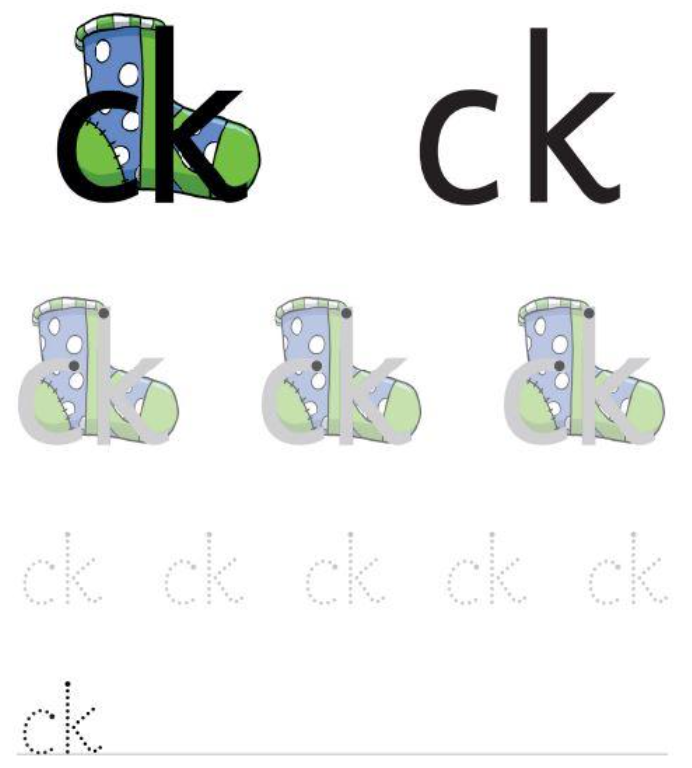
Our children are taught high quality phonics lessons for 30 minutes a day, with additional GPC and blending practise throughout the day. Each Friday the weeks' learning is reviewed to support and develop fluency and rapid recall. Our children are given the opportunity to apply their knowledge daily in their lessons through independent sentence reading.
Children make a strong start in Reception: teaching begins in Week 2 of the Autumn term. We follow the Little Wandle Letters and Sounds Revised expectations of progress:
- Children in Reception are taught to read and spell words using Phase 2 and 3 GPCs and words with adjacent consonants (Phase 4) with fluency and accuracy.
- Children in Year 1 review Phase 3 and 4 and are taught to read and spell words using Phase 5 GPCs with fluency and accuracy.
Daily Keep-up lessons ensure every child learns to read
- Any child who needs additional practise has keep up support, taught by a fully trained adult. Those who are identified at risk of falling behind are given 1:1 sessions following a clear and robust intervention in line with the Little Wandle programme. Those who require additional support in specific areas of reading are given this through high quality group sessions.
Phonics in Y2
- All Year 2 children complete the Little Wandle Revision Programme before moving on to the fluency programme.
- Quality interventions are put in place to support Year 2 children who do not pass their phonics screening or who have gaps in their knowledge identified by Little Wandle Letters and Sounds Revised assessments.
Teaching Reading
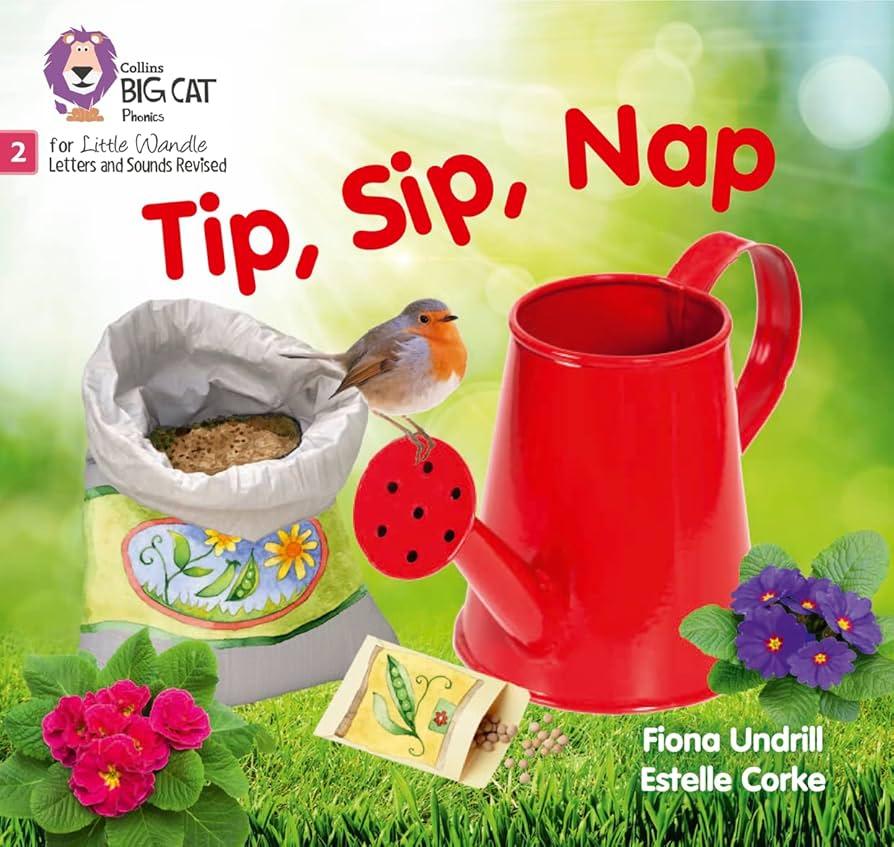
We teach our children to read five times a week through reading practise sessions. In three of these are sessions, children read with a fully trained adults in small groups of approximately six children. In the remaining 2 sessions, children read a familiar book independently. The groups are monitored by the class teacher who rotates and works with each group on a regular basis.
We use high quality books in line with our SSP programme that are carefully matched to the children's secure phonic knowledge using the assessment tracker.
Each reading practise session has a clear focus so that the demands of the session do not overload the children’s working memory. The reading practise sessions have been designed to focus on three key reading skills:
- decoding
- prosody: teaching children to read with understanding and expression
- comprehension: teaching children to understand the text.
In Reception, these sessions start in Week 4 with foundation books, until the children are able to blend. Children who are not yet decoding, have daily additional blending practise in small groups so that they quickly learn to blend and can begin to read books.
Year 2 reading.
Children in Year 2 have daily reading sessions using the Little Wandle fluency programme.
The following components are woven though each lesson with closer attention being paid to decoding for lesson 1, prosody for lesson 2 and comprehension for lesson 3.
- Vocabulary
- Background knowledge
- Reading volume
- Fluency and prosody
- Discussion and reasoning
- Enjoyment and purpose
The fourth session of the week is a class reading for pleasure and book chatter session.
The final session is a deeper dive into the text they are reading.
Home reading.
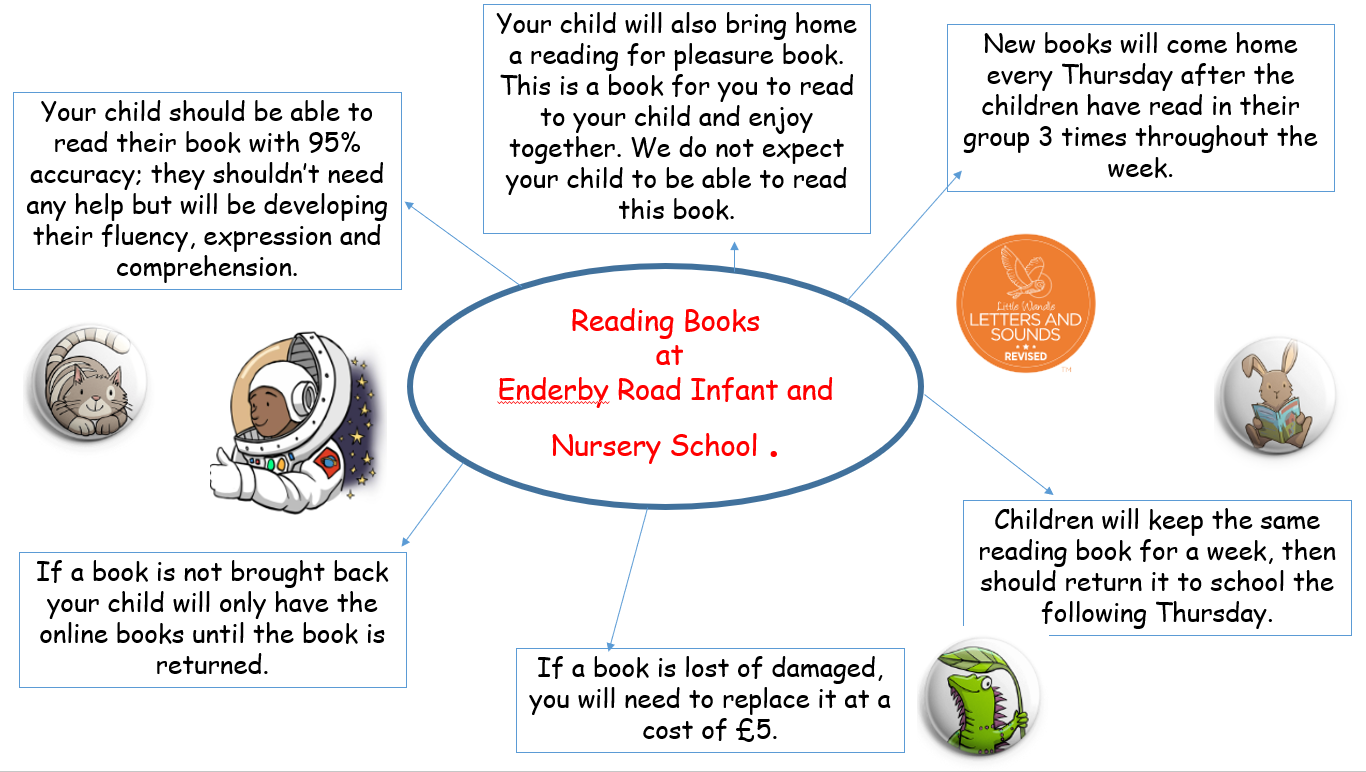
The decodable reading practise book is taken home to ensure success is shared with the family. Children are able to confidently read these books and are able to celebrate their success at home.
Three reads at home a week are encouraged and rewarded in school.
Reading for Pleasure.
- Reading for pleasure books from our school library go home for parents to share and read to their children, these are changed weekly during class book chatter sessions.
- Each class also visits our local library on a 5 week rotation to share and borrow books.
- Each morning children vote for a class story to be shared by adults with the class during the day. Adults ensure a wide and diverse range of texts are included in the choices.
- Each classroom has an inviting reading space with high quality forward facing books. These books are chosen by the class during visits to our school library and are rotated regularly.
Assessment
Children’s progress in phonics is reviewed through the Little Wandle Assessment Tracker. This is used to monitor progress and to identify any child needing additional support as soon as they need it. Those who are having interventions are assessed every three weeks to ensure progress and impact.
Assessment for learning is used:
- daily within class to identify children needing Keep-up support
- weekly in the Review lesson to assess gaps, address these immediately and secure fluency of GPCs, words and spellings.
Summative assessment is used:
- every six weeks to assess progress, to identify gaps in learning that need to be addressed, to identify any children needing additional support and to plan the Keep-up support that they need.
- The phonics lead monitors the tracker regularly and collates the data half termly- supporting adults to identify areas for development and identify those children are require additional support
- The Little Wandle Letters and Sounds Revised placement assessment is used with any child new to the school to quickly identify any gaps in their phonic knowledge and plan provide appropriate extra teaching.
Statutory assessment
Children in Year 1 sit the Phonics screening check. Any child not passing the check will re-sit it in Year 2.
Impact
At Enderby Road Infant and Nursery School, the quality teaching of Phonics results in:
- Pupils able to master phonics to read and spell as they move through school.
- Pupils becoming confident, life-long readers.
- Pupils seeing themselves as readers for both pleasure and purpose
- Develop resilience and perseverance
- Develop a love for reading that will last forever

|
Everybody-read-leaflet-for-parents | [pdf 1MB] |

|
Phonics Website
Please follow this link to the Little Wandle Letters and Sounds Revised website for further information and support materials for our phonics programme.
 |
Little Wandle letters and sounds revised |
|
|
Pronunciation guide Autumn 1 | [pdf 1014KB] |
|
|
|
LS-KEY-GUIDANCE-ENGAGING-PARENTS FINAL | [pdf 463KB] |
|

|
LS-PowerPoint-for-parents-presentation-1 | [pptx 25MB] |
|